Showing posts with label ethics. Show all posts

Friday, June 24, 2011

EVE's microtransactions: Developing profit vs. fun? Virtual vs. Real?

Spinks recently had a post on EVE's apparent plans to put pretty involved microtransactions into the game.  Her response was, well, I can't quite say "common", because it's not the most common response, but perhaps it's the most predictable of the interesting, thoughtful responses.  Here's a bit.


One of the main reasons that I think long term players get concerned about some of these microtransaction plans is that there’s a point where you wonder how far game devs are putting profit above making fun games. And if your main concern as a consumer is to buy (and pay for) fun games, you’d probably like THAT to be their main focus. [emphasis mine]


These are interesting distinctions.  Is there really a fun vs. profit measurement duality for video game developers?  Isn't profit always the primary motivator for, say, Blizzard and CCP Games when they're designing a game?  Whose job is motivated and measured only by fun maximization?  I wonder about playtesters, but I'm having a hard time arguing they're really primarily about fun; having done that a bit, it's more of a bug finding expedition.  In fact, the only game designer I can think of that's really gotten away with "fun" (measured perhaps in unconventional ways) rather than profit is id, where johnc seems to be able to release when he's darned well ready, after the game has whatever techs and features he feels are appropriate.  It's the one place where "When it's done" is always the deadline, and if there's no id software release for, well, years, that's also okay.  But they only get to ignore profit because they already have plenty [and apparently manage that profit fairly well!].  I think you also have to argue that they changed the mode of production with video game design, or at least added an alternative mode, that of shareware.  They could make a game on their own schedule and release, give or take, directly to their market.  PopCap has a lot to thank id for pioneering.


Well, I guess there's another prime example of a "game dev" who puts "fun" above profits, and that's Jonathan Blow.  Braid was a game that was meant to be completely for "fun", though I believe the term of art is (ironically) an "art" game.  Watching what he's doing with The Witness, the currently in-dev Braid follow-up, is also interesting, particularly his undercover demo of the game at the Penny Arcade Expo.


I mean, Blow is a guy who says stuff like, "[My presentation is] about 'best practices' of modern game design that I find unsettling, and the way in which 'social games' and 'gamification' are destructive."  Though Braid has been horribly successful and, I think it's safe to assume, a serious moneymaker, he's likely (?) not primarily motivated by profit.  Rather, he's at the very least actively interested in (vs. id, who was passively hoping to) redefining the mode of production for video game design and consumption. 


Anyone who comments on the state of games should watch Blow's MIGS lecture slides with audio here to see a sort of game developer countculture/alternative.


(There are others who might call themselves academic game developers, but honestly, I'm not sure I've seen anyone more motivated as a group by money, with some exceptionally notable exceptions (he said twice), than academics.  Academics [in the humanities and in "hybrid" or interdiscplinary fields that include or originate largely in the humanities; engineering professors, eg, are much more honest about their profit-centric research] money fetish is revealed largely by their obsession with repressing their pursuit of cash, you know, like when they frame funding as "a necessarily evil", but love to wield the power from grants like children on their birthday.  I can't consider most of these academic game developers in the same boat with Blow though, again, many are doing good stuff.  For example, based on their work that I've seen, I'd like to think Michael Mateas or Nick Montfort is trying, but I don't know either well.)


Let me also mention, just for Google, "singular rhythms" here.


Anyhow, here's the discussion from Spink's blog, copied here in case Spinksville ever goes away (not that it should, it's just that I hate when blogs disappear).


we like virtual worlds because they’re separate from the rat race of the real world. It’s because the real world doesn’t have much effect on the game world that the game world can be relaxed and fun

You’re first going to have to show me which games don’t overlap with the “real world”. Some are softballs, like “time”, which is obviously shared. But you also have to think about links between hardware requirements, internet access, and economic status. Think Bot Fighters (a mobile phone game) vs. World of Warcraft. Also think of cultural overlaps — ever seen someone speaking French in game? Fun, isn’t it?


As brief as I can put it: There’s no way I play Sojourn MUD literally for days if I’m not a student in college, you know? I’m not exposed to it, I don’t have the always-on network connection to play, nor the “free” time at 2am to play.


There’s a willful suspension of belief [sic] when someone goes virtual, but virtual is always about potential (sorry to trend Deleuzian here) rather than an alternative to the real.


  • “You’re first going to have to show me which games don’t overlap with the “real world”


    If you really don’t want to assume people have time and hardware enough to play computer games then I guess board games or storytelling games is where you start, and assume the majority of people could make 20 mins for a social gaming session.


    But we’re talking about computer games, so let’s assume a baseline of hardware and some available time. It is pretty easy to suspend disbelief in a virtual setting, even with minimal graphics, so it won’t need to be especially good hardware. I’m quite good at suspending disbelief, but not if game mechanics are constantly throwing RL in my face.


    But ultimately it’s easier to think of it as a continuum. Some games or types of games it’ll be easier for a player to immerse and shut the real world aspects out while they play, others it’ll be more in your face the whole time. You can still play Sojourn MUD without playing it for days on end, right? Presumably a game where power is related to time available is more immersive than one where it’s related to both time available AND RL money available. I did say minimal overlap, not none at all. I just meant a game where it’s easy to pretend it really is another world.


    • First, just to be clear, I never played Sojourn MUD for days on end. It was just that my /played there was the first I’d seen measured in days, which scared me. Little did I know how low that number would be relative to what I’d be playing in a few years… ;^)


      In my post, I was just trying to focus you away from virtual vs. real. It’s so much more interesting to talk about how the two interact, as they’re always interacting. The real world always has a direct effect on the game, since there’s really no distinction. Even a board game is highly situated culturally and commercially. What game? Where was it made? How was it made? What supply chains are required for it to be made and distributed? How was it marketed? What are the origins of its rules? Does it require literacy to play? Math? Logic? What types of logic does it favor? How is gender represented in-game? etc etc etc Those are interesting questions, but for me, MMOs raise some more very interesting and specific ones.


      So here, I wonder what’s lost by having cosmetic items in game? How does the ability to directly translate conventional cash into goods break your suspension of disbelief — and why? Why is a shirt purchased with traditional 1st world currency any more off-putting than one purchased with in-game only currency? Both require time to amass. Both represent work traded for consumables. Both sorts of goods accumulation represent very similar rat races. Why is it that a highly structured and controlled rat race in-game is more liberating to you than the rat race of a gameless life? What’s the benefit of keeping a mental distinction between the two? Is there a point at which the online rat race could become the drudgery and you’re excited about your job? Do[es] anyone work at Starbucks to escape their boutique in Second Life? ;^) These are interesting questions with potentially enlightening answers, I think.


      The lack of virtual vs. real is largely the point of Edward Castronova’s work, but it’s a line of inquiry that’s worth extending. Sure, there’s a relatively minimal overlap somewhere, but that’s only a relative measurement. Dig a bit under the surface, and that perception of a minimum overlap is actually a heck of a deep interconnection.


I guess I would sum by saying, "Games always throw RL in your face, there are just times we've let ourselves get too habitualized to notice it." And it's there that the real politics begin.

Monday, May 2, 2011

Cenarion Hatchling: See, that wasn't so tough, was it?


(the above image unethically stolen straight from Blizzard's site)

After totally screwing up the moonkin pet and Make-a-Wish where half went to charity and half straight to Blizzard's pockets, Blizzard learns most of their lesson with the Cenarion Hatchling for Japan.

For every Cenarion Hatchling purchased between now and July 31, 100% of the $10 USD adoption fee will be donated to the American Red Cross's Japan Earthquake and Pacific Tsunami relief efforts. This support will enable the Red Cross to provide shelter, food, emotional support, and other assistance to victims of this disaster.


About the only thing wrong here is that it'd appear the Hatchling will continue to be sold for cai$h after July, and Valve's fundraiser headgear went kaput once the fundraiser was over. But now I'm splitting hairs. Sorta.

EDIT: Okay, I'm not splitting hairs. Why every pet doesn't give all $10 to the Red Cross right now, I don't know. I like the Monk, I'd rather have the $10 goes somewhere useful, but it's straight cash to Blizzard's pockets. I really prefer the Valve, get it for a donation or don't get it at all, remember this the next time you sit on your hands hard sale better.

Friday, March 25, 2011

Valve shows Blizzard how to give to charity

To follow up on my post on the vanity, ur, charity moonkin pets from last year, here's Valve, selling hats for Team Fortress 2, and doing it The Right Way. I'm not going to fault Valve for not paying their taxes out of their own pockets. Give to Caesar and all that.


Team Fortress 2 Blog:

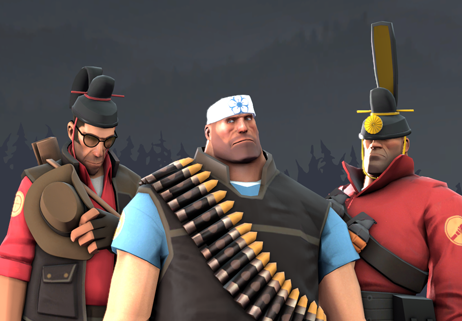
Today, we'd like to offer a chance to help out at a time when that help matters most. To support the relief efforts currently underway in Japan, we're introducing three limited edition hats and two special noisemakers to the Mann Co. store. The 'Humanitarian's Hachimaki' ($7.99), the 'Benefactor's Kanmuri' ($19.99) and the most prestigious 'Magnanimous Monarch' ($99.99) will be available from now through April 6. All proceeds (net of applicable taxes) will go directly towards the Japanese disaster relief fund that the American Red Cross has set up.


What's more? They point you to the website directly to donate if you'd prefer to use it as a tax deduction and potentially give more by giving the same.

While your Mann Co. store purchases cannot be written off as tax deductions, those who would prefer to donate directly to the American Red Cross fund can do so at their website.


That wasn't so hard, was it?

Monday, March 21, 2011

Hey, wow, I'm buying a moonkin pet FOR CHARITY!!!1!


I couldn't believe the venom directed my way when I was a (admittedly) a little snarky on WoW Insider about the moonkin vanity charity pet announcement last year. I sorta suggested to the folks saying how wonderful it was that buying the pet would give $5 to Make-A-Wish Foundation that they, um, could give twice as much if they, say, gave the charity all $10.

Blizzard wasn't being magnanimous. Add up the amount they make on the pets, subtract the amount they spent making the pets, and you still got a number that's a bit larger than zero. And if you divided the amount of cash they make each month by the amount of cash they gave to a charity with the last pet, well, it ain't a real high percentage. I, iirc, even admitted that they could be giving more elsewhere and that even the cash they pay their employees could very well be going to charities as well. Still, my guess is that Blizzard isn't tithing.

They used charity as a cover discourse for profit. Come on folks. If you want to donate, donate. And heck, if you want to waste money on vanity pets, waste your money and own it.

Nice to see that somebody else agrees.

Wednesday, January 12, 2011

How about you teach us instead? Re: Wow, Dungeons are Hard!

Wow, Dungeons are Hard! - World of Warcraft:

DPS specs often get blamed the most for not knowing what is going on. It should be your business to understand the mechanics of the fights. You’re a member of a team, not a follower who can always rely on someone else to tell them what to do. Which are the spells that need to be interrupted? Which are the void zones that you absolutely must get out of? Which are the adds that must be burned down (and conversely, when should you ignore the adds and focus on the boss instead)? If you aren’t sure, then ask. [emph mine]


No, you shouldn't have to ask. Nor should DPS stay in the LK theme of button spamming. Instead, the game should teach you each instance fight.

Essentially, what Blizzard's saying here is if you're not in a hardcore, first-run guild that's going to blast through the instances first, you must learn from what those guys have said. If you're part of the second wave, it's your responsibility to figure out the instances from outside of the game. You must read Thott/WoWhead. You must have someone in your guild that has already run the instance. You can't do this on your own, Nemo. You just can't!

The attitude's a cop out. If [PU]group members are going to continue to expect you to get it right the first time or they'll drop -- an attitude, it should be pointed out, this blog post by Blizzard reinforces -- then the game must include clues, preferably from the content of quest lines that teaches you how to handle an instance. There must be in-game methods to learn the lore. As much as gaming is an industry of metalepsis, how to run an instance should be taught in-game.

There's no RP reason not to think that the weaknesses and powers of the instances aren't known by some NPCs, and there's no reason not to make quests, accessible in solo PvE, that prepare us for boss battles in instances. I think I've mentioned that here before. I know I've thought it. It's not rocket science. The move's obvious. Lore in game, please.

Tuesday, December 22, 2009

Ethics and soloing in LK 3.3


Ethics

Admittedly, there are better videos of the scene, in part because I forgot the keystrokes for taking a movie on my Mac until a ways into the "movie," but I figured I'd pass along my, um, unique directorial style anyway.

I've got to admit, Cleansing Drak'Tharon was something of a let-down. I'd grown to like Drakuru a bit over the months, and that in part was why I decided to finish the questline, even though, at 80 and several months removed from playing the start of the line, I'm a bit past and over it. To see him working for the Lich King kinda stunk. It seems there are a few quests in LK that trick you into doing tasks with dubious ethics. I'm remembering the worgen quest line where you're asked to skin someone after you off them, iirc. I liked the ambiguity there, as it was more a call for those who just hit "Accept" and keep running, killing X of Y without thinking about the text in between, to actually read the text. Still, it seems like there have been another one or two ethically questionable quests in addition to Drakuru that were less well done than the worgen.

In any event, I've been duped. And yes, I still took the reward.

Soloing

My other "insight" was the way that soloing has changed in a big way with the new dungeon finder system in 3.3. There is a pretty in-depth guide for soloing Cleansing Drak'Tharon at WoWHead. I was going to give soloing a whirl, but figured I'd be efficient and hit LFG for the Keep while I was at it. Died twice learning to solo the spiders, and got an invite in the middle of the second death. Bam. I'm grouped, and a few minutes later, even with a Death Knight out of play whose wife apparently was giving him an earful about playing WoW when he should have been doing something else, we were through the entire instance, np, playing with four.

If I can group any instance (ended up being heroic) and end up with my first purple since my Lava Belt[1] more quickly than figure out how to solo, well, it looks like I might end up doing lots more PUGging than doing it alone in the future.

That's a shame. I've often thought that this blog should be called The Confessions of a Part-time Soloer, and it's a part of the game I get the feeling I'll largely miss. Though the loot makes it a lot easier.

[1] The purple was [Keystone Great Ring]. I'm usually good enough on loot that I pass on things I can't use, and greed on things that I'd put into the rotation immediately for DPS, but here I considered needing this ring for all of a millisecond. It would be (and will be) a great panzerkin soloing addition with all the armor and STA. I greeded and got lucky. And nobody asked me to trade afterwards (seems there was an another purple (in retrospect, I believe it was [Leggings of the Winged Serpent], in which case that seems to obviously be for the boomkin) that I could have needed for spell power, iirc), so I'm guessing I'm in the clear. Woohoo!

I have been panzer-soloing a good deal with what quests I do. Whacking melee makes for a more sustainable quest run than oomkin-ing all over the place.

EDIT: Didn't realize the Armory keeps track of your need and greeds! I'm 17 greeds to 2 needs right now. Not too bad. Wonder when it started keeping track.

Tuesday, June 2, 2009

3.1 fishing changes are unethical. [sic]

I put a pretty phat comment up on Restokin, a blog I enjoy even if they spec'd their druid wrong. ;^D Unfortunately they were championing another change in the game that makes it more "accessible," which plays into a number of my pet peeve topics. Here it is, reproduced below (actually, I ended up drafting here then c&p'n there.)

However, I really think they made some great improvements to fishing in the 3.1 patch that convinced me to go back and work on my fishing some more.

What was that change? I can now fish anywhere, even with a terrible fishing skill. I could fish in the dalaran sewers or pond. I can fish anywhere in Northrend.


This reminds me too much of why of Teeth and Claws said he was hanging it up and leaving WoW: the game's becoming too accessible, imo. He's not the only druid that's said see ya to WoW recently either (a bit about it here).

There's a problem with ghettoizing the old world as well as cheapening the work behind the sense of achievement those that truly grinded through parts of the game have "earned". This change in fishing reminds me a bit too much of the reasoning behind dailies. Make the game easier and bribe your players with a little virtual cash. Good thing WoW learned the lesson from Ultima Online that a closed economic system doesn't work, and went straight to manipulating the virtual market in an attempt to maximize reality cash. (I'd say there's nothing inherently wrong with that, but then Jonathan Blow apparently thinks there is. Check the RPG Vault article I linked earlier, and Teeth and Claws is talking the topic up some more now too.)

And seriously (insert smilies! I kid Hasselhoff, I kid!), there's no excuse for a druid not to level up fishing the "right way". Moonglade teleport and a few casts before sign-offs, anyone?! ;^)